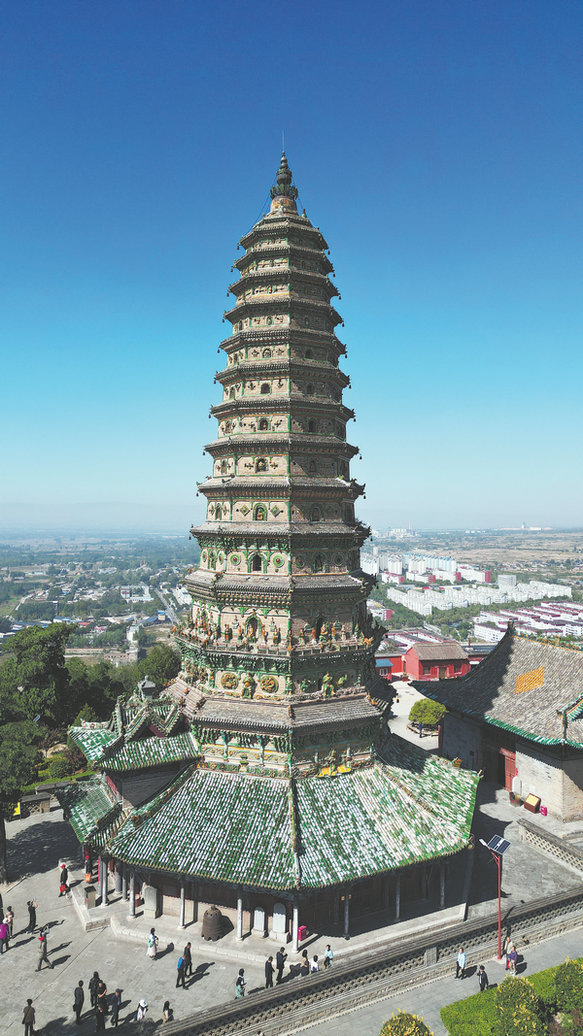
Guangsheng Temple
Introduction
Guangsheng Temple is an ancient Buddhist temple complex located on the slope and at the foot of Huoshan Mountain in Zhaocheng township, Hongtong county, Linfen city, Shanxi province, China. With a history spanning over 1,800 years, it is one of the earliest Buddhist temples in China. The temple complex is composed of three main sections: the upper monastery, the lower monastery, and the Water God Temple. Renowned for its historical significance, architectural beauty, and cultural treasures, Guangsheng Temple has become a prominent landmark in Shanxi province. Its "three treasures"—the Feihong Pagoda, the Zhaocheng Jin Tripitaka, and its murals—are particularly celebrated.
History
Early Origins and Development
The construction of Guangsheng Temple dates back to the Eastern Han Dynasty (25-220), making it one of the oldest Buddhist temples in China. Over the centuries, the temple underwent multiple reconstructions due to destruction caused by wars and natural disasters. The structures and relics visible today primarily date from the Yuan Dynasty (1271-1368) and Ming Dynasty (1368-1644), reflecting the architectural and artistic styles of these periods.
Zhaocheng Jin Tripitaka
One of the temple's most remarkable historical contributions is its association with the Zhaocheng Jin Tripitaka, a 900-year-old Buddhist canon. This collection of scriptures is considered the most extensive surviving printed works of the Jin Dynasty (1115-1234). Originally housed in a sealed section of the temple tower, the Tripitaka was rediscovered in 1933 by a visiting monk. During the War of Resistance Against Japanese Aggression (1931-1945), Chinese soldiers heroically rescued the scriptures from Japanese forces, hiding them in coal mines and caves. Today, the Zhaocheng Jin Tripitaka is preserved at the National Library of China, with over 4,300 chapters rescued by the Eight Route Army.
Reconstruction and Recognition
The Feihong Pagoda, a significant structure within the temple complex, was built in 1527 during the Ming Dynasty. Despite surviving two major earthquakes measuring above 8.0 on the Richter scale, the pagoda remains intact. In 2018, it was recognized by the London-based World Record Certification as "the tallest multicolored glazed pagoda in the world."
Architecture
Feihong Pagoda
The Feihong Pagoda, also known as the "Flying Rainbow Pagoda", is a 13-story, 47.31-meter-tall octagonal tower. Its multicolored glazed walls and roofs create stunning rainbow-like reflections under sunlight. This architectural masterpiece features intricate designs, including Buddhist figures, animals, flowers, and jewels. Wind chimes adorn the eaves of each tier, adding a melodic charm to the structure.
Temple Complex Layout
The Guangsheng Temple complex is divided into three main sections:
-
Upper Monastery: Located higher up the mountain, this area houses several halls and statues dedicated to Buddhist worship.
-
Lower Monastery: Situated at the foot of the mountain, this section includes the Great Hall of Sakyamuni Buddha and other significant structures.
-
Water God Temple: Known for its Yuan Dynasty murals, this temple features paintings on its four walls, depicting scenes of stage performances and religious rituals.
Murals
The murals within Guangsheng Temple are among the most precious artistic treasures of the Yuan Dynasty. These include paintings in the Water God Temple and the gable wall in front of the Great Hall of Sakyamuni Buddha. The murals vividly depict Buddhist stories, ancient lifestyles, and cultural practices.
Cultural Significance
Guangsheng Temple holds immense cultural and historical importance. It serves as a repository of Buddhist art, philosophy, and literature. The Zhaocheng Jin Tripitaka, housed here for centuries, is a testament to the temple's role in preserving Buddhist heritage. Additionally, the temple's murals and architectural designs provide valuable insights into the artistic and cultural achievements of the Yuan and Ming dynasties.
The temple's association with the heroic rescue of the Zhaocheng Jin Tripitaka during the War of Resistance Against Japanese Aggression highlights its significance as a symbol of cultural preservation and resilience. The bravery of Chinese soldiers and local communities in safeguarding these priceless treasures underscores the importance of protecting cultural heritage.
Preservation and Restoration
Efforts to preserve and restore Guangsheng Temple have been ongoing for decades. The National Library of China has played a crucial role in restoring the Zhaocheng Jin Tripitaka, dedicating 17 years to the meticulous restoration of ancient pages. In April 2023, replicas of 100 chapters were gifted to the temple and a local library, ensuring the continued accessibility of this invaluable heritage.
The temple's structures, including the Feihong Pagoda and murals, have been carefully maintained to withstand natural and human-induced challenges. The recognition of the Feihong Pagoda as a world record-holder further emphasizes the importance of preserving its architectural integrity.
Tourism
Visitor Information
Guangsheng Temple is a popular destination for tourists and history enthusiasts. Visitors can explore the temple's "three treasures"—the Feihong Pagoda, the Zhaocheng Jin Tripitaka, and its murals—while enjoying the serene surroundings of Huoshan Mountain. Guided tours are available to provide insights into the temple's history, architecture, and cultural significance.
The temple is accessible via high-speed trains and buses from major cities in Shanxi province, including Taiyuan and Linfen. Nearby accommodations and restaurants cater to visitors, offering local delicacies such as knife-cut noodles and Wu Family smoked meat.
Nearby Attractions
Shanxi province is home to numerous historical and cultural landmarks that complement a visit to Guangsheng Temple. Nearby attractions include:
Yungang Grottoes: A UNESCO World Heritage Site featuring 45 major caves and over 59,000 Buddhist statues.
Xuankong Temple: The Hanging Temple built into a cliff at Hengshan Mountain.
Wutai Mountain: One of China's four sacred Buddhist mountains, known for its ancient monasteries and natural beauty.
Pingyao Ancient City: A UNESCO World Heritage Site with well-preserved Ming and Qing Dynasty architecture.
Hukou Waterfall: A spectacular waterfall formed by the Yellow River.








